How long should a deck dry before oiling or treatment?
In this guide
There is no single number of hours that suits every deck after washing. Before applying decking oil or a penetrating finish, the timber must meet the moisture and application requirements of the chosen product. A surface that looks dry is a useful observation, but it does not replace those checks.
The rush often starts when cleaning and treatment are planned as one task. In practice, preparation is only complete when the timber is ready to receive the finish.
There are three different drying stages
| Stage | Question to clarify |
|---|---|
| Between washing and treatment | Does the timber meet the product’s application requirements? |
| Between applications | Does the system require the previous coat to dry, or a different procedure? |
| Before using the deck again | When can it receive foot traffic, furniture and contact with water? |
Confusing these stages can mean using an interval between coats as the waiting period after washing. Ask for each stage to be identified in the quotation or maintenance instructions.
Three stages that often get confused
The sequence is always the same; the durations are not. They depend on the product, the timber and the conditions, and they come from the technical sheet, not from this article.
- Drying after washingThe timber has to be dry right through, not just to the touch, before it takes any product.
- Interval between coatsThe time the manufacturer states between successive applications, where the product calls for more than one.
- Back in useThe point from which you can walk on it again and put the furniture back without marking the finish.
Use the exact product as your reference
Find the full product name and its technical data sheet. A photograph of the packaging is more useful than “wood oil”. Products within the same family may have different requirements.
For example, Osmo Decking-Oil documentation requires a clean, dry surface, specifies a timber moisture limit and explains that lower temperatures and higher air humidity delay drying. Those conditions apply to that particular product; they should not automatically be transferred to another finish. Osmo Decking-Oil instructions.
The previous coating and the preparation already carried out also matter. Washed, stripped and sanded decks are not necessarily equivalent surfaces, even if their colour is similar.
What to observe on site
Record when and how the deck was cleaned, whether it has rained since and which areas remain damp for longer. Look at junctions with walls and areas covered by furniture, without dismantling boards or supports.
If application requires a moisture reading, it must be taken with equipment and a procedure suited to the timber. One reading from a particularly sunny board does not describe the entire deck. The acceptable limit comes from the finish documentation, not a generic rule found online.
A water-drop test may show differences in surface behaviour. On its own, it does not measure internal moisture or establish that the finish can be applied.
What if there is only one day of good weather?
Before booking the work, ask how the decision will be made if the timber is not ready. An available day in the diary does not make the surface suitable for treatment.
It may be necessary to separate cleaning from finishing and organise access accordingly. The solution depends on the forecast and the product, but should not involve indiscriminately covering damp timber with improvised materials.
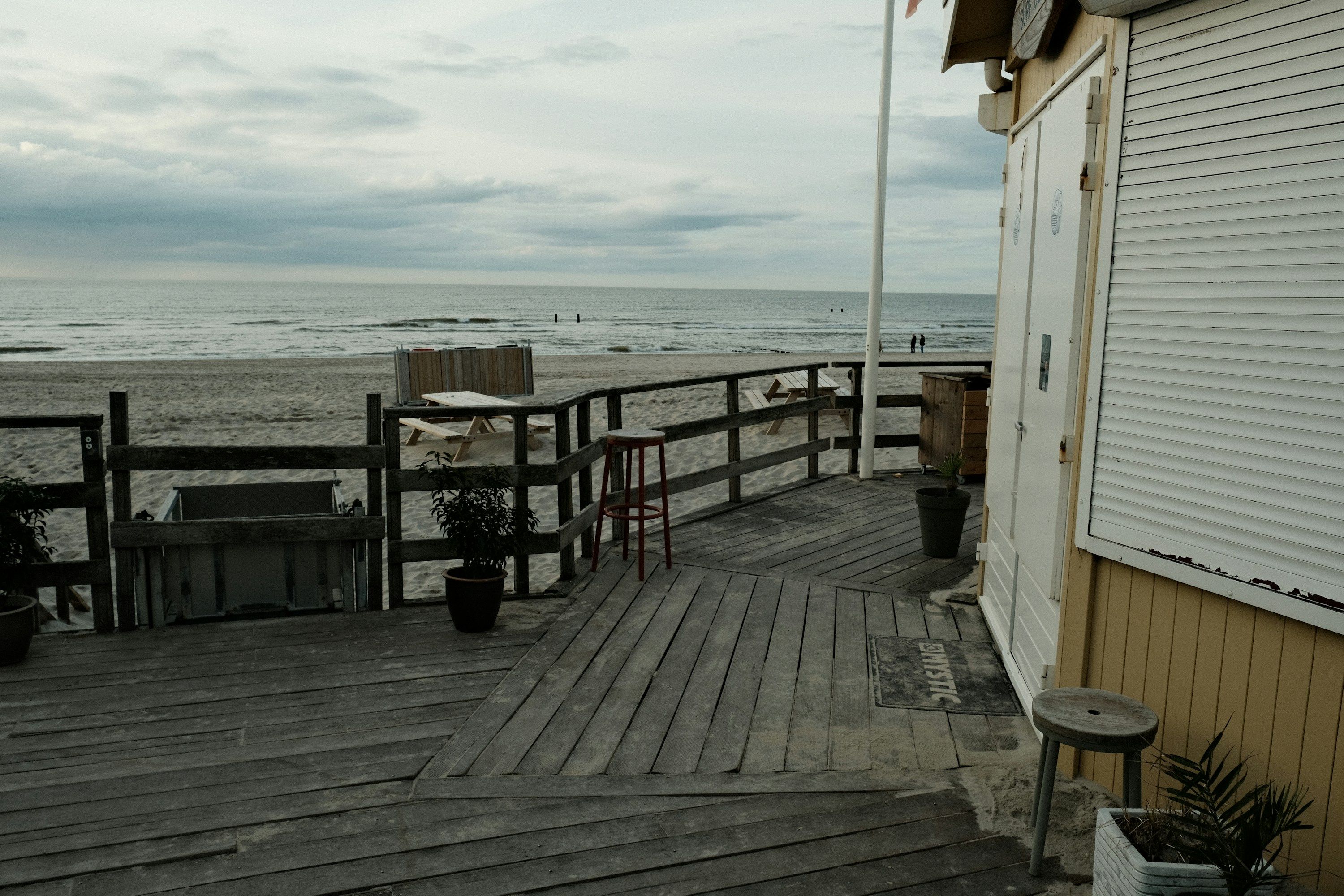
For a deck in Costa Nova or Praia de Mira, explain whether it receives irrigation, sits under a roof and gets direct sun. These details describe drying conditions better than simply saying the property is close to the sea.
What to ask for in the quotation
Confirm the proposed product, how moisture will be assessed and who decides when to move to the next stage. Ask for the planned stages and rescheduling conditions to be included in the quotation.
To compare finish families, read our guide to exterior wood treatment near the sea. This article deals with when to apply a finish, rather than choosing a universal product.
Frequently asked questions
Can I apply treatment as soon as the wood stops looking dark?
A change in colour does not confirm every requirement. It can help you observe progress, but it does not replace the technical data sheet or assessment of the different areas.
Will an extra coat compensate for applying a finish to damp timber?
It should not be used as an automatic correction. Identify the system and understand the problem before adding more product. A different preparation process may be needed.
Planning an exterior wood treatment (page in Portuguese)? Send photographs of the deck and the reference for its previous finish to help guide the assessment.
Further reading