Can pressure washing damage stone or outdoor tiles?
In this guide
Yes. Pressure washing can damage stone and tiles when the settings and technique do not suit the material. The main risks involve joints, erosion of vulnerable stone and changes to protective finishes. Water can also contribute to visible mineral deposits. A suitable method and a prior test help reduce these risks.
What damage should be considered?
Cleaning can affect both stones and joints. Removed jointing material or dislodged mortar can weaken the paving and allow water to pass beneath it. The issue may then extend beyond appearance.
- Loss of jointing material: the jet may remove sand or mortar between paving units.
- Surface erosion: some soft or porous stones may lose material or texture.
- Changes to the finish: a protective treatment or patina may be removed or altered.
- Efflorescence: water moving through a material can carry salts that remain visible after evaporation.
These risks depend on the surface and its condition. A white mark alone is not enough to diagnose efflorescence.
Points to check by material
| Material | Risk to assess | Why | Approach to confirm |
|---|---|---|---|
| Limestone and sandstone | Higher for soft or porous varieties | Potential loss of texture or material | Gentle method, suitable spray and a compatible product if needed |
| Portuguese calçada | Vulnerable stones and joints | Some stones are calcareous; joints may empty | Prior test and preservation of the jointing system |
| Granite and reconstituted stone | Varies by product | Composition, finishes and joints differ | Suitable settings, continuous movement and testing |
| Outdoor ceramic and porcelain tiles | Check vulnerable areas | Cracked tiles, coatings and deteriorated joints | Account for both tiles and junctions |
| Concrete | Variable | Friable, painted or sensitive concrete may be marked | Least aggressive effective method, testing and drainage control |
There is no universal pressure value in bar that can be applied without context. The same pressure may have different effects depending on the nozzle, distance, movement and condition of the paving.
How to reduce the risks
- Identify the stone or tiles before starting.
- Test in an inconspicuous area and wait for it to dry before judging the result.
- Where a jet is appropriate, choose an attachment suitable for the surface and avoid a stationary concentrated jet.
- Keep the movement steady and the distance controlled.
- Examine joints before and after. Any replenishment must suit the existing system and be defined in the work scope.
A test should represent the actual difficulty, including joints. A clean strip on the strongest stone does not necessarily validate a method for the whole area.
Common mistakes
- Judging only while wet. Water may hide differences. A dry assessment remains necessary.
- Increasing pressure against a stain. Review the method and product compatibility before persisting.
- Staying in one spot. A concentrated jet can cut into soft stone.
- Ignoring emptied joints. Incomplete jointing may affect stability and needs an appropriate remedy.
- Using bleach routinely. Compatibility depends on the product, dose, finish and joints. Follow the manufacturer’s instructions.
The limits of remote assessment
A photograph shows the apparent condition without measuring actual porosity or mortar cohesion. It can help with initial material identification, reveal green growth and show visible joints. It does not reveal every internal defect.
The method may therefore need confirmation on site, followed by a test where the material’s response is uncertain.
What affects the price?
Material, porosity and the precautions required influence the working time. Joint condition, extent of growth, distance to a water supply, steps and total area also matter. Small jobs may be subject to a minimum charge.
Joint repairs or localised stain treatment should be distinguished from general washing. Consult the indicative prices (page in Portuguese) and the pressure washing service information (page in Portuguese) to frame your enquiry.
Further reading
Check the paving and cleaning product manufacturers’ instructions. The following references support the guide’s principles.
Frequently asked questions
What pressure is suitable for outdoor tiles?
It depends on the tile, finish and joints. A moderate setting alone does not define a safe method without the attachment and distance. Avoid a stationary concentrated jet and confirm the requirements for the installed product.
How can I tell whether my stone is porous?
Absorption varies with the stone, finish and previous treatments. Darkening when wet is an indication, not a definitive identification. Look for the supplier’s reference and plan an inconspicuous test before selecting the method.
Have your surface assessed
Send photographs of the stone or tiles and their joints, with the locality and approximate area. The aim is to clarify the method and what can reasonably be expected.
Explore our stone and Portuguese paving cleaning service (page in Portuguese).
Porous natural stone: possible result after cleaning
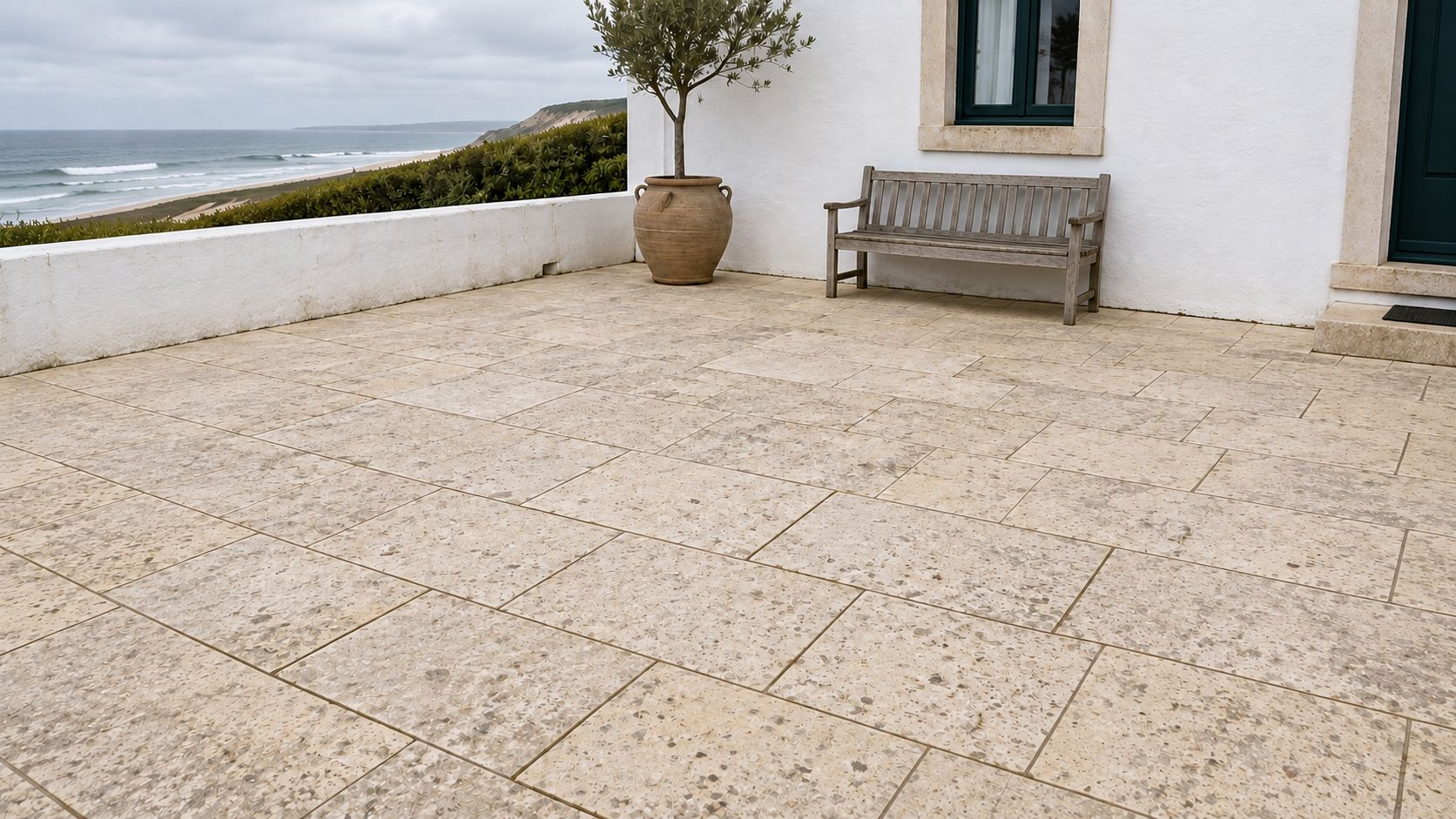
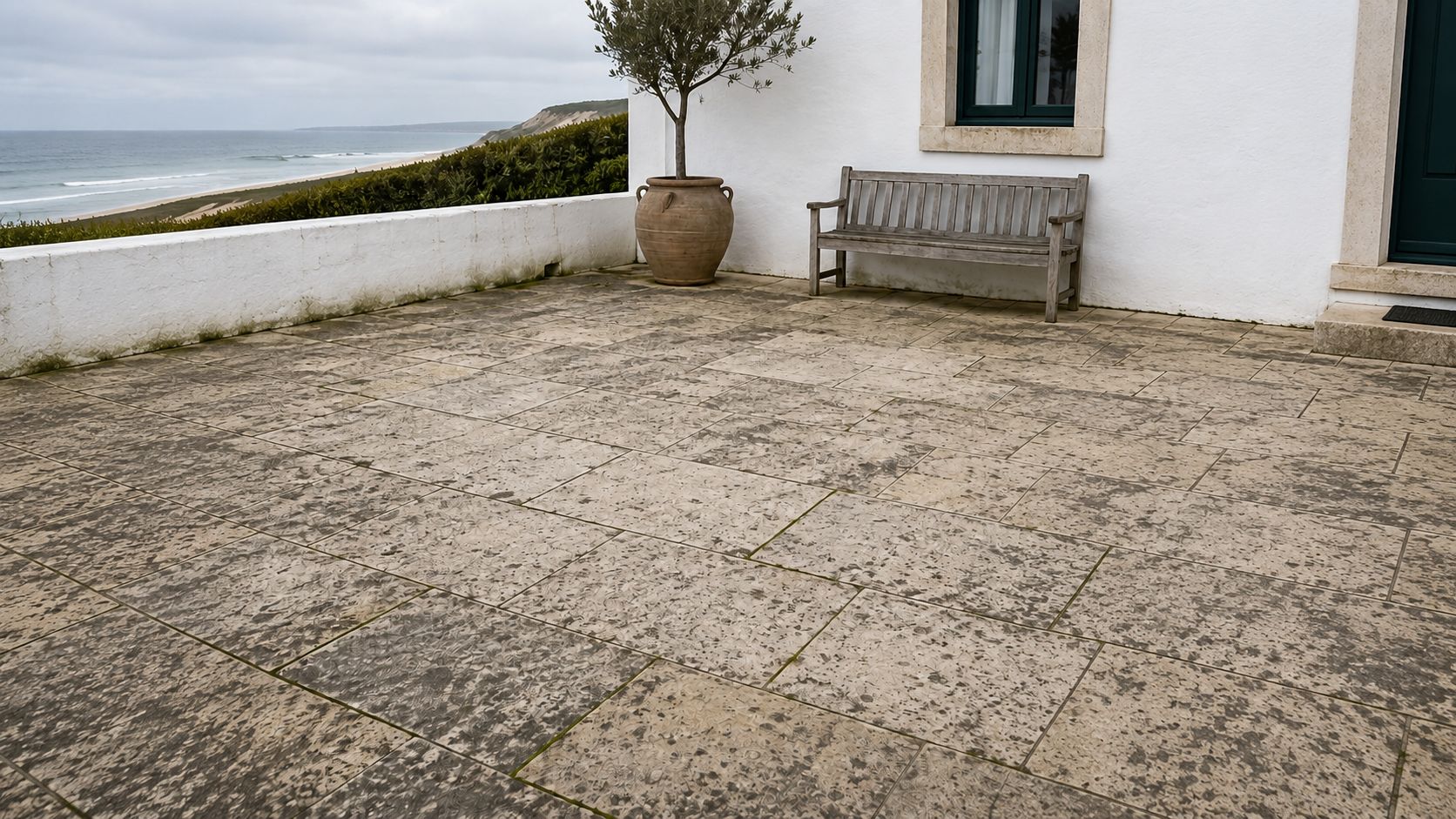
Use the left and right arrow keys to compare the initial condition with the result. Shift moves faster.
Further reading